Venezuela has been in a slow, grinding collapse for years, but the headlines barely scratch the surface of what is actually happening there—and why the United States keeps such a close eye on it. Most people outside the region still think of Venezuela as a failed socialist experiment or an oil-rich country that somehow ran out of gas. The reality is far more complex, and far more strategic.
The most recent presidential election illustrates this perfectly.
At the center of the opposition movement was María Corina Machado, the most prominent and credible challenge Nicolás Maduro’s regime has faced in years. Machado didn’t just emerge as a symbolic figure—she overwhelmingly won the opposition’s 2023 primary, demonstrating undeniable popular support across Venezuela. But that momentum never made it to the ballot. The Maduro-controlled institutions barred her from running, disqualifying her through administrative and judicial maneuvers that international observers widely viewed as politically motivated.
Blocked from competing directly, Machado backed a substitute candidate: Edmundo González Urrutia, a former diplomat with broad opposition support and little personal political baggage. González became the vehicle for a vote that was, in reality, a referendum on the Maduro regime itself.
According to opposition tallies, independent observers, and parallel vote counts collected by civil society groups, González won the election outright. Venezuelans turned out, rejected years of authoritarian drift, and voted for change. But when the results came in, the system simply refused to recognize them. The National Electoral Council—fully controlled by the regime—failed to release full, transparent results. The Supreme Court fell in line. And the military leadership, long the final arbiter of power in Venezuela, publicly reaffirmed its loyalty to Nicolás Maduro.
So while the opposition secured what it argues was a clear electoral mandate, Maduro retained the presidency.
This is the critical point often missed: the dispute is not merely about one candidate versus another. It is about a system designed to prevent the transfer of power, even when voters clearly demand it. María Corina Machado never took office—not because she lost, but because she was never allowed to compete. And the candidate who carried her movement’s vote appears to have won, only to be overridden by the machinery of an entrenched regime.
The world didn’t just witness a controversial election. It witnessed an election where winning wasn’t enough.
This is the environment Washington is navigating, and it explains why the U.S. refuses to take its eyes off Venezuela. At the center of everything is oil. Venezuela still has the largest proven oil reserves on the planet. If that industry ever stabilizes under a legitimate and competently run government, it would reshape global energy markets overnight. For the United States, that’s both an opportunity and a national security concern, depending on who controls the production and who they align with.
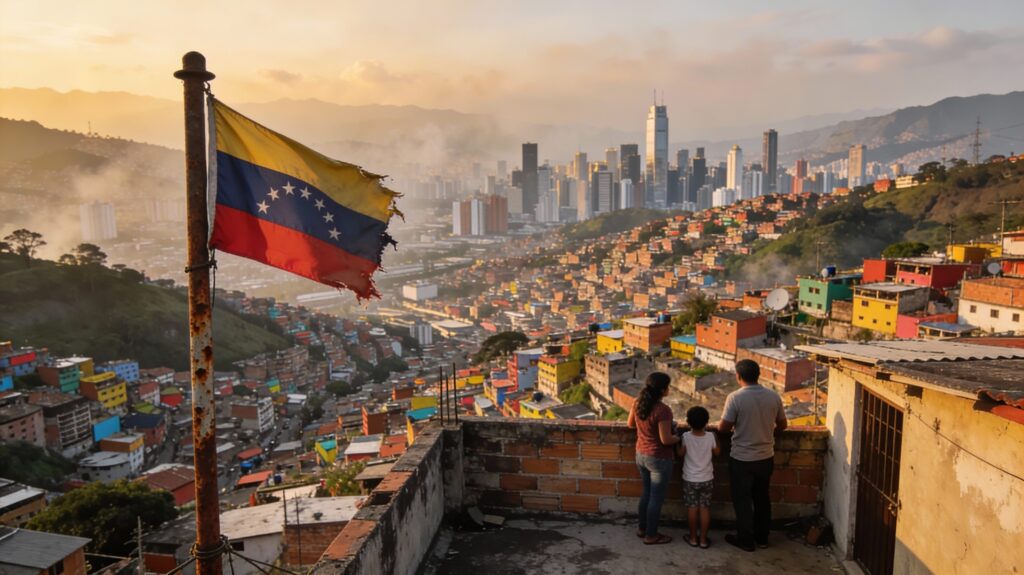
And that leads to the second reason the U.S. cares: great-power competition. Venezuela is no longer just a struggling country—it’s a strategic beachhead for China, Russia, and Iran. China is embedded in Venezuelan telecom, logistics, surveillance systems, and debt structures. Russia has military and intelligence ties that go back decades. Iran supplies fuel, supports sanctions-evasion networks, and uses Venezuelan territory for activities Washington watches very closely. The United States cannot afford to ignore a country with that much foreign influence sitting in its own hemisphere.
There’s also the human factor. Nearly eight million Venezuelans have fled the country, creating one of the largest mass migrations in modern history. That wave of people is reshaping neighboring countries and increasingly affecting U.S. domestic politics. You cannot stabilize the region—or America’s southern border—without addressing what is happening inside Venezuela.
On the ground, the country is stuck in a strange limbo. The economy has embraced an unofficial form of dollarization that keeps small pockets of commerce alive, but it’s not sustainable. Infrastructure barely functions. The opposition retains broad popular support, but the regime has the intelligence services, the courts, the military, and the economic levers. Foreign actors are deeply entrenched. Everyone knows the election was stolen, but there is no mechanism internally that can reverse it.
And that brings us to the future. As we head toward 2026, it’s unlikely that Maduro voluntarily steps aside. He may entertain the idea of a “transition,” but it will be a transition he controls—one where he or a handpicked successor stays insulated from prosecution, sanctions, or accountability. The U.S. will continue to pressure him, but it will do so quietly, balancing two conflicting needs: stabilizing oil markets and pushing back against China and Iran’s growing footprint. Sanctions will tighten and loosen in cycles based on whatever leverage Washington needs in the moment.
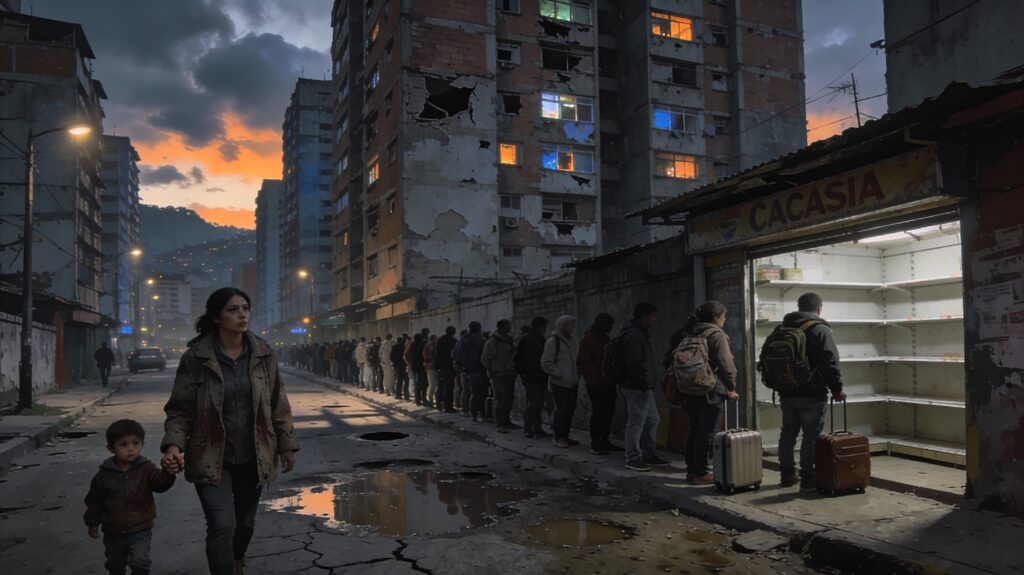
Meanwhile, China and Iran will double down. They see Venezuela as a long-term strategic win: a foothold near the United States with economic, political, and military value. The opposition will continue fighting, but without institutional power, it is uphill every step of the way. And the average Venezuelan will keep navigating a system that was never designed to give them a path to real change.
If you’re looking for the most realistic forecast for 2026, it’s this: Maduro will be removed from office—either through a negotiated exit or against his will. The election exposed a legitimacy crisis the regime has been unable to contain, and the pressure points are no longer theoretical. They are economic, diplomatic, and internal.
The results of the election may remain unrecognized on paper, but the consequences are already unfolding in practice. International patience is thinning. Sanctions pressure is recalibrating. Quiet negotiations are accelerating behind the scenes. And fractures within the ruling coalition—particularly among economic elites and military stakeholders—are becoming harder to conceal. Authoritarian systems can absorb outrage, but they struggle to survive sustained illegitimacy paired with economic exhaustion.
The United States will continue to play a decisive, if deliberately understated, role. Washington understands that abrupt regime collapse carries risks, but so does indefinite stasis. Any viable transition—whether orderly or forced—will require U.S. engagement, coordination with regional partners, and leverage over the financial and energy lifelines that keep the Maduro government afloat. Under Donald Trump, that approach is likely to be more transactional, more direct, and less patient with symbolic concessions.
For everyday Venezuelans, the tragedy is that change almost always comes late and at a high cost. But momentum has shifted. Venezuela is no longer just frozen in crisis—it is moving toward an inflection point.
Venezuela is not simply a political failure. It is a geopolitical pressure cooker where energy markets, migration flows, foreign influence, and authoritarian survival all collide. And while the timing remains uncertain, one conclusion is increasingly difficult to avoid: the current configuration of power in Caracas is unsustainable. Whether by negotiation or force, the end of the Maduro era is approaching.